
There are evenings when the backyard offers one polite bird at a time, as if everyone has made an appointment and agreed not to crowd the waiting room. Even though it has been unseasonably warm, this is still our favorite time to sit outside and see what happens. Around 5 p.m., the regionally native plants, birdbath, and bubbler begin attracting the dinner crowd. A hummingbird stops by. Then another. A finch searches the plants for a meal. A phoebe lands on the wire, flicks its tail, and leaves before I can find the camera. It is calm, civilized, and very easy to pretend I know what I am doing.
This was not one of those evenings.
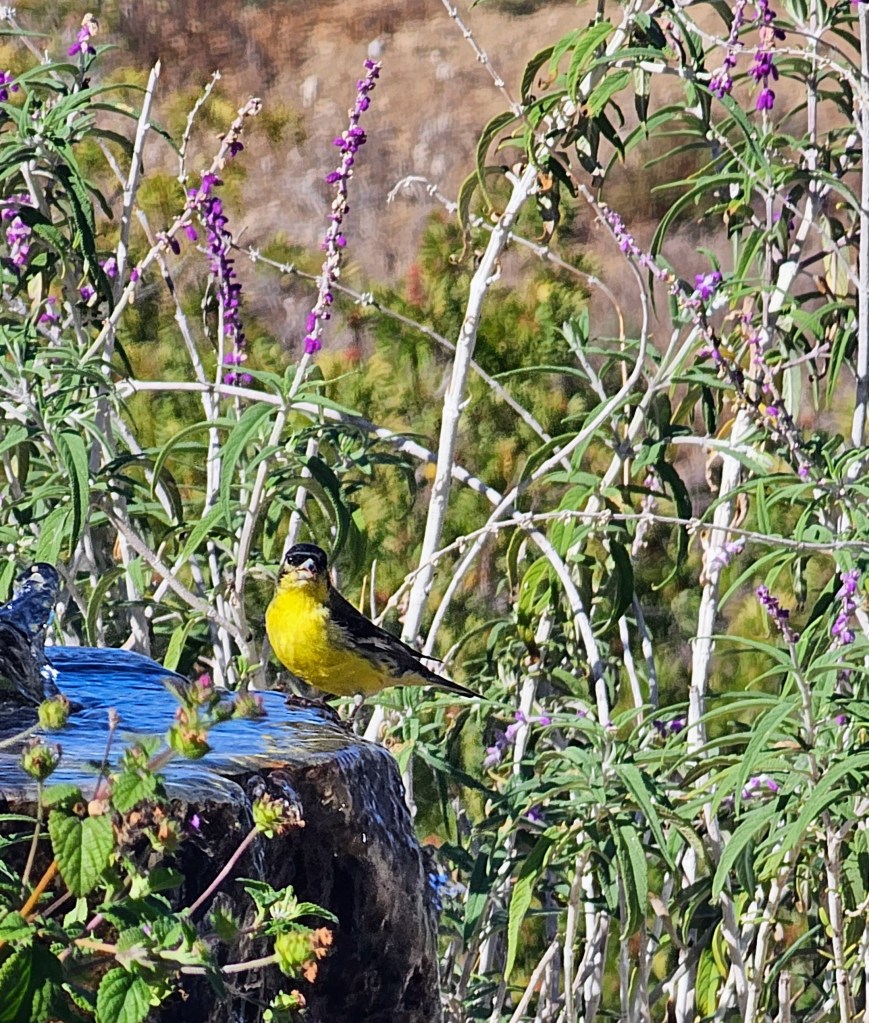
It started at the bubbler, which has become the backyard equivalent of a popular neighborhood café, except the customers are louder, territorial, and never pay. An Allen’s Hummingbird zipped in first, all speed and confidence, only to find a group of House Finches already claiming the best seats. A Lesser Goldfinch joined the crowd, adding a bright flash of yellow to the dinner rush. The hummingbird hovered. The finches shuffled. Everyone seemed to agree that sharing was a beautiful concept best practiced by other birds.
Then came the Dark-eyed Juncos.
Not one Dark-eyed Junco. Not two Dark-eyed Juncos. A blizzard of juncos, which is their official collective name and, frankly, could not be more accurate. They dropped into the yard in a flurry of slate-colored backs, pale bellies, and flashing white tail feathers. First, they crowded around the birdbath for a drink and a quick splash. Then they hopped down to the ground to search for food, covering it so quickly that it looked as though the landscaping had suddenly developed a pulse. Watching them arrive all at once made me wonder whether I should enjoy the spectacle or check the weather app.
Once the juncos opened the gates, the rest of the neighborhood apparently received an alert. Yellow-rumped Warblers bounced through the branches, flashing the bright patches that made them seem dressed for a tiny bird-themed pep rally. An Orange-crowned Warbler appeared too and, as Orange-crowned Warblers often do, looked far more yellow-green than orange. The name felt less like a helpful field mark and more like an inside joke among ornithologists.
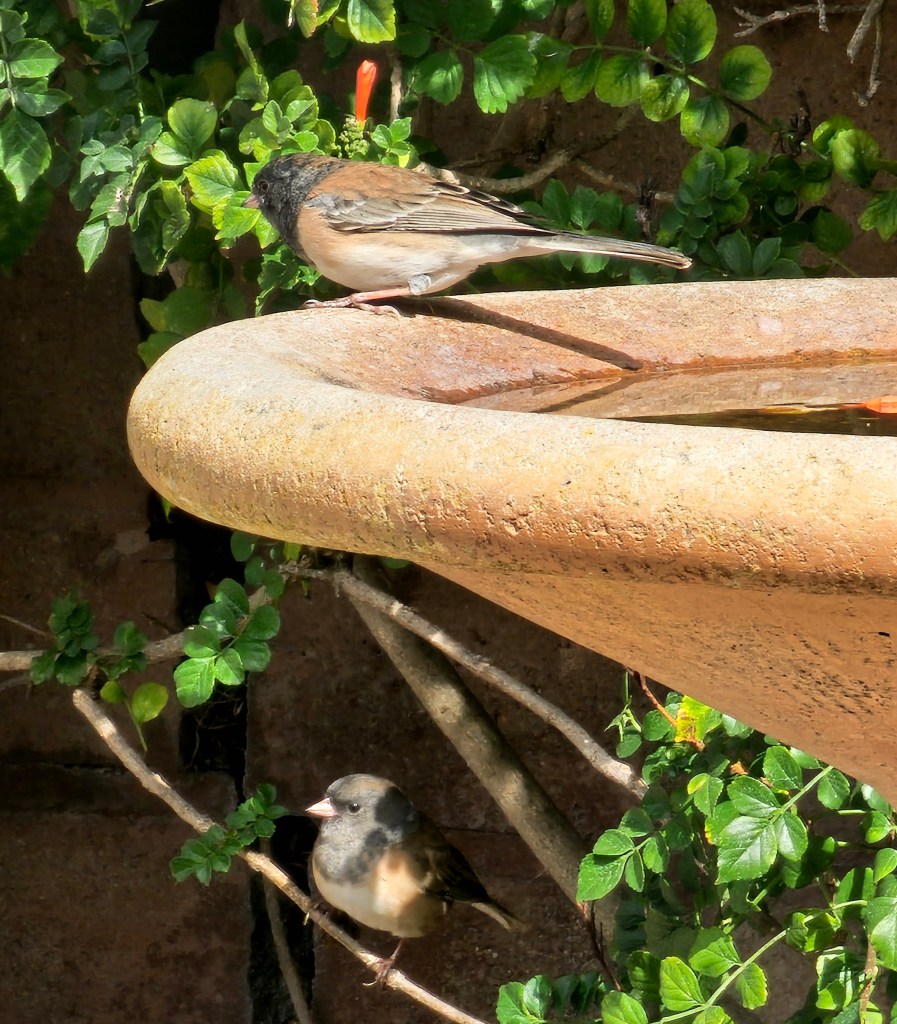
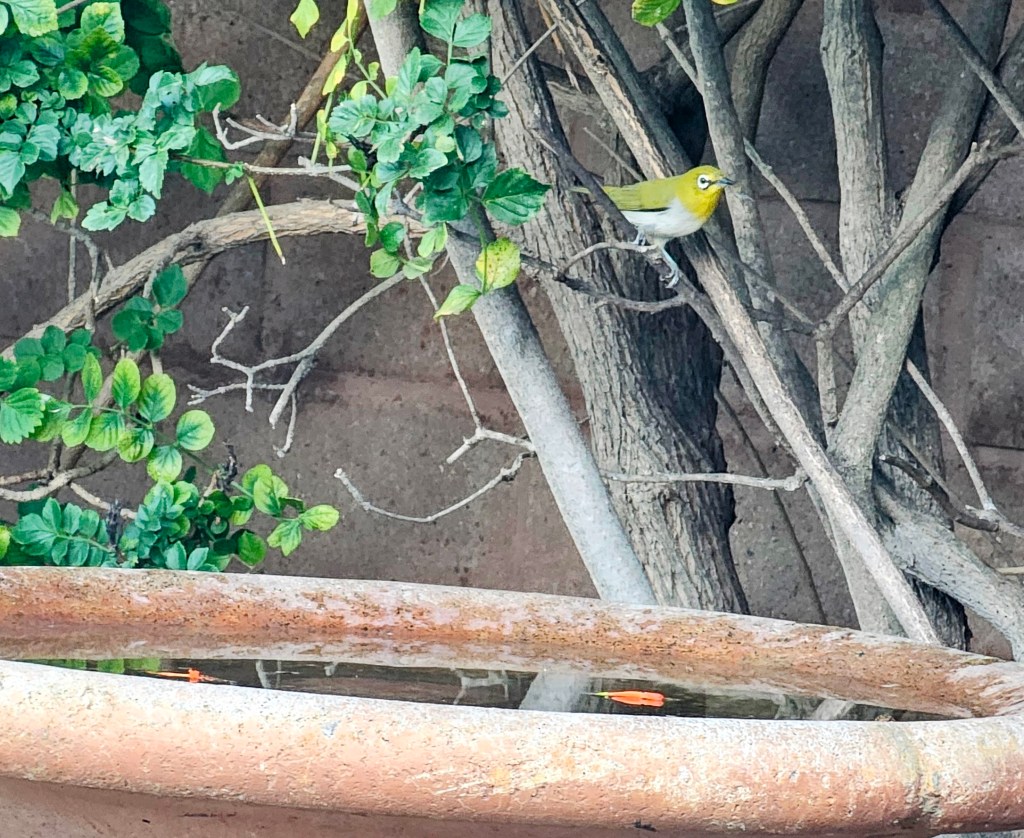
Black Phoebes took up their usual lookout posts, making short, efficient flights after insects and returning to the same perch with the reliability of commuters who had perfected their route. A small group of Swinhoe’s White-eyes moved through the foliage in a busy yellow-green blur, their bright white eye-rings making them look perpetually surprised by whatever they found. The white-eyes joined the warblers and phoebes at the birdbath. Everyone except the finches and hummingbirds seemed happy to use it; those two groups remained loyal to the bubbler.
And then, without warning, everything stopped.
Two Red-tailed Hawks circled overhead, calling as they went.
The effect was immediate. The bubbler and birdbath emptied. The shrubs went still. The juncos vanished so completely that it seemed possible I had imagined the entire storm. Even the usual background chatter shut down. A backyard that had been overflowing with wings and whistles became so quiet I could hear the water bubbling away to an audience of no one.
The hawks circled slowly, broad wings held steady, looking less like visitors and more like management conducting an unannounced inspection. Every smaller bird knew the procedure: freeze, hide, and do not be the employee who makes eye contact.
Eventually, the pair drifted away, still circling, until they disappeared beyond the trees. For a moment, nothing moved. Then one finch returned to the bubbler. A phoebe called. The juncos reappeared from whatever secret junco bunker had swallowed them, and within minutes the backyard was busy again.
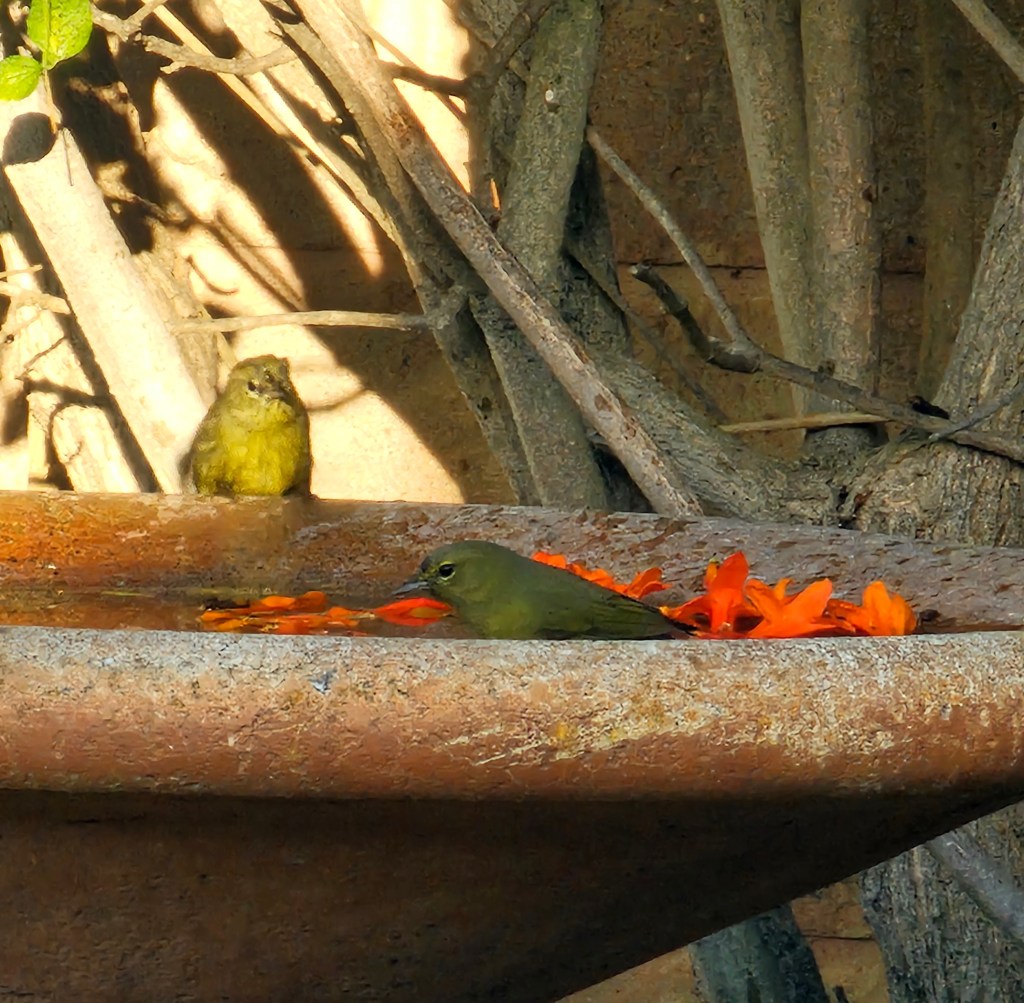
Then it became a full smorgasbord of birds: hummingbirds and finches negotiating the bubbler, warblers and white-eyes returning to the birdbath, phoebes flycatching from the wires before taking a dip, and juncos hopping from the water to the ground like living confetti with dinner reservations.
It was a useful reminder that backyard birding rarely follows a schedule. Sometimes you get one bird and a long look at a quiet patch of native plants. Sometimes the sky sends two hawks to press the mute button. And sometimes, on an unseasonably warm evening, you get a blizzard in the backyard and the best table in town.


Leave a Reply